Agafay Desert weather: month by month, with what to wear
The Agafay Desert weather is dry and sunny most of the year, but it swings a lot between seasons and between day and night. Summer afternoons are often above 35 °C, while winter nights can drop close to 5 °C. Spring (March to May) and autumn (September to November) are the most comfortable months for desert activities.
Agafay sits about 30 to 40 km south-west of Marrakech, so its climate is broadly similar to the city's. The main difference is the open landscape: with no buildings or trees, you feel the sun more in the day and the cold more at night. Below is what to expect each month, and how to dress for an afternoon and evening in the desert.
Agafay weather at a glance
The temperatures below are typical daytime highs for the Marrakech area and should be read as a rough guide, not a forecast. Individual days can be several degrees warmer or cooler, and evenings in the desert are always noticeably cooler than the afternoon.
| Months | Afternoons | Evenings | In a word |
|---|---|---|---|
| December–February | Mild, high teens °C | Cold, can approach 5 °C | Crisp |
| March–April | Warm, low to mid 20s °C | Cool | Ideal |
| May | Warm to hot, high 20s °C | Mild | Very good |
| June | Hot, 30s °C | Warm | Hot afternoons |
| July–August | Very hot, often above 35 °C | Warm | Peak heat |
| September | Hot, around 30 °C | Mild | Cooling down |
| October–November | Warm, 20s °C | Cool to chilly | Ideal |
Winter in Agafay: December to February
Winter days are usually bright and clear, with comfortable afternoon temperatures in the high teens. This is the season with the best views of the High Atlas, whose peaks are often covered in snow and look spectacular from the desert.
The catch is the evening. Once the sun drops, the temperature falls fast, and on the coldest nights it can get close to 5 °C. Sunset comes early too, around 5:30 PM, so most of a dinner in the desert happens in the dark and the cold.
- Wear: layers, a warm jumper or fleece, a proper jacket for after sunset, long trousers and closed shoes.
- Good to know: winter is also the main rainy period, though rain in this region tends to come in short spells rather than long wet weeks.
Spring: March to May
Spring is one of the best times for an Agafay desert visit. Afternoons are warm without being tiring, evenings are cool and pleasant, and the Atlas can still have snow on its higher peaks in March and early April.
By May the heat starts building, with afternoons that can reach the high 20s or more. Still, it's a very comfortable month for quad biking, buggies and camel rides, especially with a late-afternoon start.
- Wear: light clothes for the afternoon, a light jacket or jumper for the evening, sunglasses and sun cream.
Summer: June to August
Summer is hot. In July and August afternoons in Agafay often go above 35 °C, and the stone ground reflects the heat. If you visit in summer, avoid the middle of the day: a late-afternoon start, like our 3:00 PM departure, means you do your activities as the heat begins to ease and arrive at dinner as the evening cools.
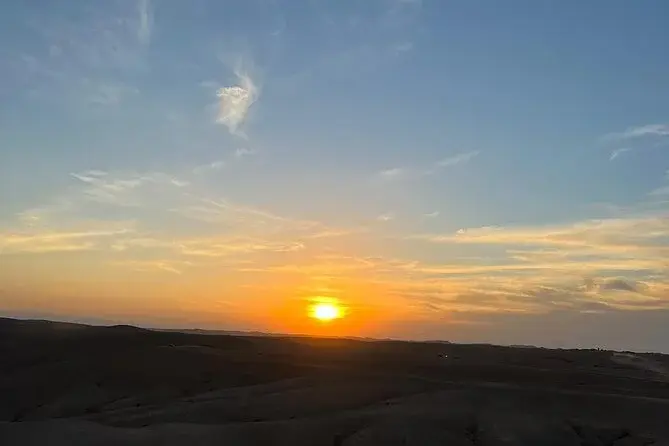
Summer evenings are warm and very pleasant, and sunset is late, around 7:45 PM at its latest. The long light is a real bonus for photos.
- Wear: loose, light, breathable clothing that still covers your legs for quad or buggy rides, a hat or scarf, sunglasses and plenty of sun cream.
- Bring: water. Large bottles aren't included on our trips, so bring enough for the afternoon.
Autumn: September to November
September still feels like summer in the afternoons, but evenings soften noticeably. October and November are, for many people, the sweet spot: warm afternoons, cool evenings and generally stable weather. By late November the nights are getting chilly again and the first snow can appear on the Atlas.
- Wear: light clothes for the activities and a warm layer you can add at sunset. In November, bring a proper jacket.
Wind, dust and rain
Agafay is a dry, stony landscape, so dust is part of the experience, especially on quads and buggies when vehicles ride in a line. A windy day makes it more noticeable. A scarf or buff over your nose and mouth and a pair of sunglasses make a big difference. We don't provide scarves or goggles, so it's worth picking up a cheche (a long desert scarf) in the Marrakech souks before your trip.
Rain is uncommon and mostly falls between late autumn and spring. If the weather makes an activity unsafe on the day, we offer a free reschedule to the next suitable day or a full refund.
Whatever the month, pack one layer more than you think you'll need. The difference between a desert afternoon and a desert evening surprises nearly everyone.
Best time to visit the Agafay Desert
- Best overall: March to May and September to November.
- Best for mountain views: December to March, when the Atlas is most likely to have snow.
- Best for long, warm evenings: June to September, if you can handle hot afternoons.
- Most challenging: July and August afternoons for heat, and December and January nights for cold.
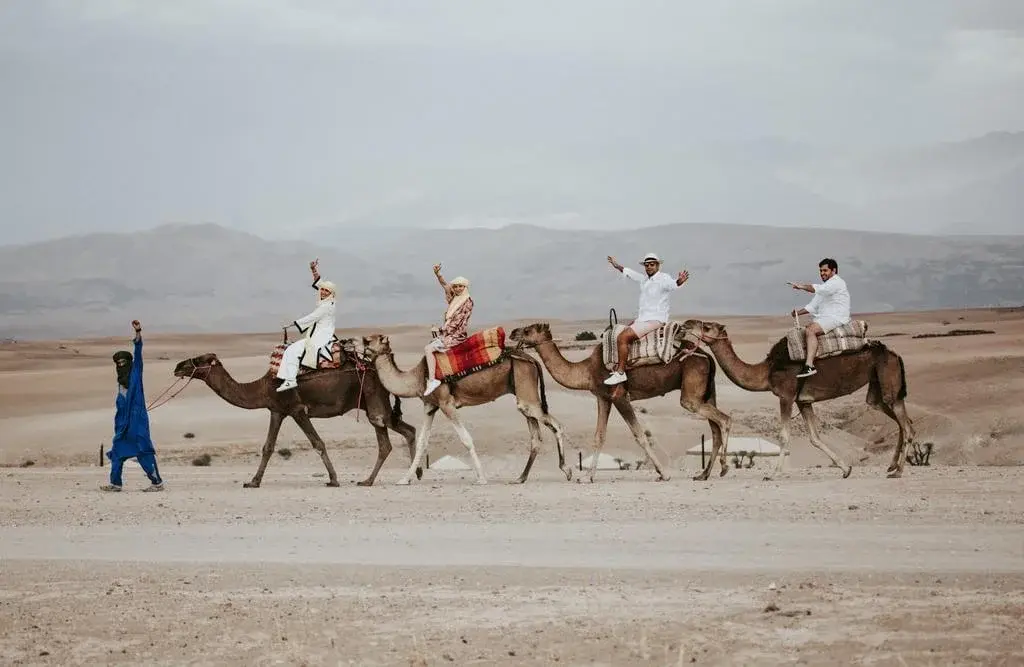
For a sunset camel ride in any season, our sister site explains what to expect on an Agafay camel ride.
Weather and photography in Agafay
The weather has a big influence on how your photos turn out. Clear winter days give the sharpest views of the snowy Atlas, especially in the late afternoon when the low sun lights up the peaks. In summer, heat haze can soften the mountains on the horizon, but the long golden hour before sunset makes up for it, with warm light on the hills and long shadows across the tracks.
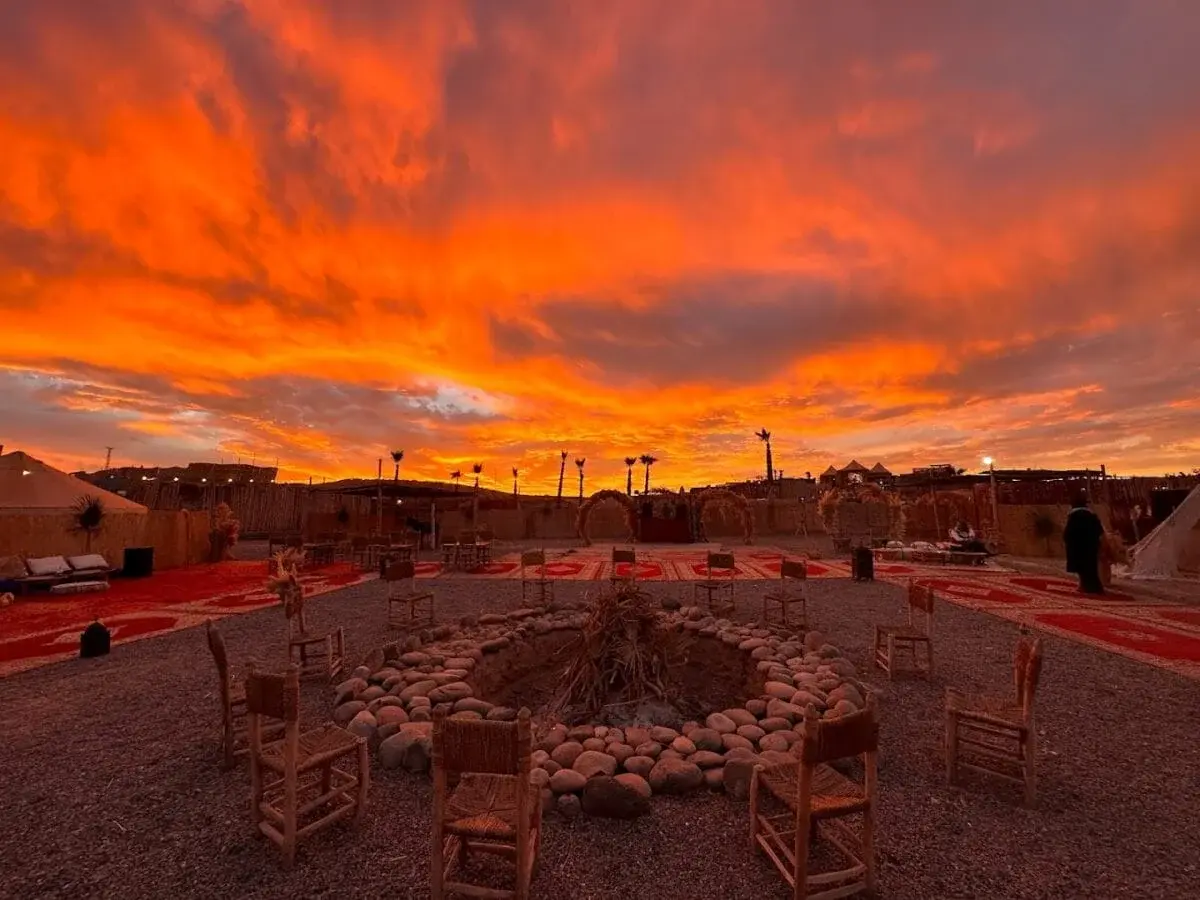
Cloudy days are not a loss either. A layer of cloud often gives dramatic skies at sunset and softer light for portraits on a camel. Dusty or windy days are the hardest for photos: keep your phone or camera in a pocket or bag while riding, and wipe the lens before you shoot. Whatever the season, the best pictures usually come in the last hour before sunset, so plan to have your camera ready for the camel ride.
How the weather shapes our trips
All our packages leave Marrakech at 3:00 PM. That time works across the year: in summer it avoids the worst of the heat, and in winter it makes sure you're riding in daylight before the early sunset. The activities run in the late afternoon and the camel ride and dinner fall around sunset, which shifts from roughly 5:30 PM in winter to 7:45 PM in summer.
To see what's included in each trip and pick the one that suits your dates, browse our Agafay desert tours. If you're still planning the logistics, our guide to getting from Marrakech to Agafay covers pickup points and travel time.
Quick packing list for any season
- Closed shoes and long trousers (essential for quad and buggy rides)
- Scarf or buff and sunglasses
- Sun cream and a hat
- A warm layer for the evening, and a real jacket from November to March
- Water
- A small bag you can keep on you